Pay Per Click Marketing Guide: Strategies for 2025 Success

The world of pay per click marketing is evolving faster than ever as we approach 2025. With rising competition and constant changes in digital advertising, staying ahead is essential for businesses looking to stand out.
Pay per click marketing continues to deliver measurable results, offering proven ROI and the ability to generate leads quickly. Its precision targeting, robust data, and scalability make it a cornerstone of modern marketing strategies.
This comprehensive guide will walk you through the latest fundamentals, emerging trends, top platforms, and cutting-edge strategies to help you master pay per click marketing in 2025. Ready to boost your ROI and drive sustainable growth? Let’s dive in and explore how you can leverage the newest tactics for measurable success.
Understanding Pay Per Click Marketing in 2025
Navigating digital advertising in 2025 requires a keen understanding of pay per click marketing. As businesses compete for attention in crowded online spaces, mastering PPC is essential for effective growth. This section explores what makes PPC unique, why it remains vital, and how evolving trends will shape your strategies.

What is PPC and How Does It Work?
Pay per click marketing is a digital advertising model where you pay only when a user clicks your ad. Advertisers enter bids on keywords or target specific audiences, competing for placement on platforms such as Google Ads, Microsoft Ads, Meta Ads, LinkedIn, and TikTok. For example, Google processes over 99,000 searches per second, making it a prime venue for PPC.
The cost-per-click (CPC) model means you pay per click, while cost-per-acquisition (CPA) focuses on paying for conversions. Unlike SEO, which builds organic presence, PPC delivers immediate results. PPC is a core part of omnichannel marketing strategies, complementing SEM and SEO for a holistic approach.
Why PPC Remains Critical in 2025
Pay per click marketing stands out by delivering instant visibility and measurable traffic. While SEO is a long-term strategy, PPC drives quick results, which is crucial in a rapidly shifting market. With an average return of $2 for every $1 spent, PPC offers impressive ROI.
Advanced targeting options allow you to reach audiences by demographics, interests, location, device, and behaviors. Even if users do not click your ad, brand visibility increases. PPC supports reputation management by controlling which keywords are associated with your brand and works in tandem with organic efforts. Its share of digital ad spend continues to rise, showing its enduring value.
Key PPC Terminology and Metrics
To excel at pay per click marketing, understanding key metrics is vital. Here are some essential terms:
- Impressions: The number of times your ad is shown.
- CTR (Click-Through Rate): The percentage of impressions that result in clicks.
- Quality Score: A measure of ad relevance and landing page experience.
- Ad Rank: Determines your ad’s position.
- Conversion Rate: The percentage of clicks that lead to a desired action.
Tracking conversions and ROI is made easier with tools like Google Analytics, which provides real-time goal tracking. Quality Score influences both ad placement and costs. Negative keywords help filter irrelevant traffic, while well-designed landing pages boost results. Regular A/B testing ensures continuous improvement.
Types of PPC Ads and Formats
Pay per click marketing offers a variety of ad types to suit different goals:
- Search Ads: Appear on search engine results pages.
- Display Ads: Visual banners on websites and apps.
- Shopping Ads: Product listings for e-commerce.
- Video Ads: Formats like skippable and non-skippable ads on YouTube.
- Remarketing/Retargeting: Target previous visitors.
On social platforms, options include carousel, image, and dynamic ads, with local service ads for geographic targeting. Emerging in 2025 are interactive and AI-driven formats that boost engagement. Choosing the right ad type depends on your objectives, platform, and audience.
The PPC Landscape: Trends and Challenges for 2025
The future of pay per click marketing is shaped by automation, AI, and evolving privacy standards. Automated bidding and AI-powered targeting are becoming the norm, while the phase-out of third-party cookies pushes marketers to rely on first-party data. Competition is increasing, leading to higher CPCs and the need for smarter strategies.
Voice and visual search are expanding, presenting new opportunities and challenges. Cross-device attribution and compliance with data regulations demand careful planning. According to AI-driven search ad spending projections, investment in AI-driven PPC strategies is expected to surge, highlighting the growing role of technology in campaign success. Staying informed and adaptable is key to thriving in this dynamic environment.
Step-by-Step PPC Campaign Planning for 2025
Creating a successful pay per click marketing campaign in 2025 requires a strategic, data-driven approach. By following these six essential steps, businesses can maximize ROI, streamline operations, and stay ahead in a rapidly evolving landscape.

Step 1: Defining Objectives and KPIs
Start every pay per click marketing campaign by clarifying your objectives. Are you aiming for more website traffic, qualified leads, direct sales, or increased brand awareness?
Align these goals with your wider business strategy. Select key performance indicators such as click-through rate (CTR), cost per acquisition (CPA), return on ad spend (ROAS), and conversion rate. For example, financial advisors often monitor cost per qualified lead to understand campaign efficiency.
Design landing pages tailored to each campaign goal. Use attribution models to accurately measure results. Regularly review KPIs, adjusting them as business needs evolve. Clear objectives lay the groundwork for measurable, sustainable pay per click marketing success.
Step 2: Audience Research and Keyword Strategy
Effective pay per click marketing relies on knowing your audience inside and out. Pinpoint demographics, interests, and pain points. Leverage keyword research tools to find high-intent and long-tail keywords relevant to your offering.
Analyze competitors’ keywords and ad strategies for insights. Build negative keyword lists to filter out unqualified traffic. Tools like Semrush and Google Keyword Planner help identify opportunities and gaps.
Consider the intent behind each search term, matching ad messaging accordingly. Adapt strategies to emerging trends like voice and visual search. A robust keyword and audience strategy ensures your pay per click marketing targets the right users at the right time.
Step 3: Crafting Compelling Ad Copy and Creative
Ad copy and visuals are the front line of your pay per click marketing efforts. Write headlines that demand attention and clear calls to action that guide users. Tailor messaging for each audience segment and platform.
A/B test different ad variations to discover what resonates most. Use emotional triggers, strong value propositions, and relevant ad extensions (like sitelinks and callouts). For display and social ads, focus on eye-catching visuals and concise text.
For example, financial advisors might emphasize trust and expertise to build credibility. Consistent testing and refinement help your pay per click marketing stand out in a crowded digital space.
Step 4: Platform Selection and Budget Allocation
Choosing the right platforms is crucial for pay per click marketing success. Evaluate the strengths of Google, Microsoft, Meta, LinkedIn, and TikTok based on your campaign goals and target audience.
Establish daily and monthly budgets, selecting appropriate bid strategies like manual, automated, or target CPA. Allocate budget by analyzing historical performance and potential for growth.
Diversify spend across search, display, and social platforms to expand reach and mitigate risk. For example, B2B campaigns may focus more on LinkedIn Ads. Continuously monitor your spending to prevent budget exhaustion or underspending in your pay per click marketing initiatives.
Step 5: Launch, Monitor, and Optimize
With your pay per click marketing campaign built, launch with conversion tracking enabled. Monitor key metrics daily and weekly, breaking down performance by device, location, and audience segment.
Pause underperforming ads and reallocate budget to top performers. Employ automated rules for bid adjustments and pacing, ensuring efficient spend. For example, adjust bids based on time-of-day insights.
Regular optimization cycles are essential. Automation tools can simplify monitoring and adjustment, especially as campaigns scale. For more on streamlining these processes, see marketing automation for advisors.
Step 6: Reporting and Scaling Success
Comprehensive reporting is the backbone of sustainable pay per click marketing growth. Use Google Analytics, platform dashboards, and data visualization tools to create actionable reports.
Share insights with stakeholders using clear charts and graphs. Identify your top-performing keywords, ads, and audiences, then scale successful campaigns by increasing budget or expanding targeting. Experiment with new ad formats or platforms as you grow.
Document lessons learned for future reference. Expanding from search to video ads, for example, can unlock fresh opportunities. Consistent reporting and scaling set the stage for ongoing pay per click marketing success.
Top PPC Advertising Platforms and Their 2025 Innovations
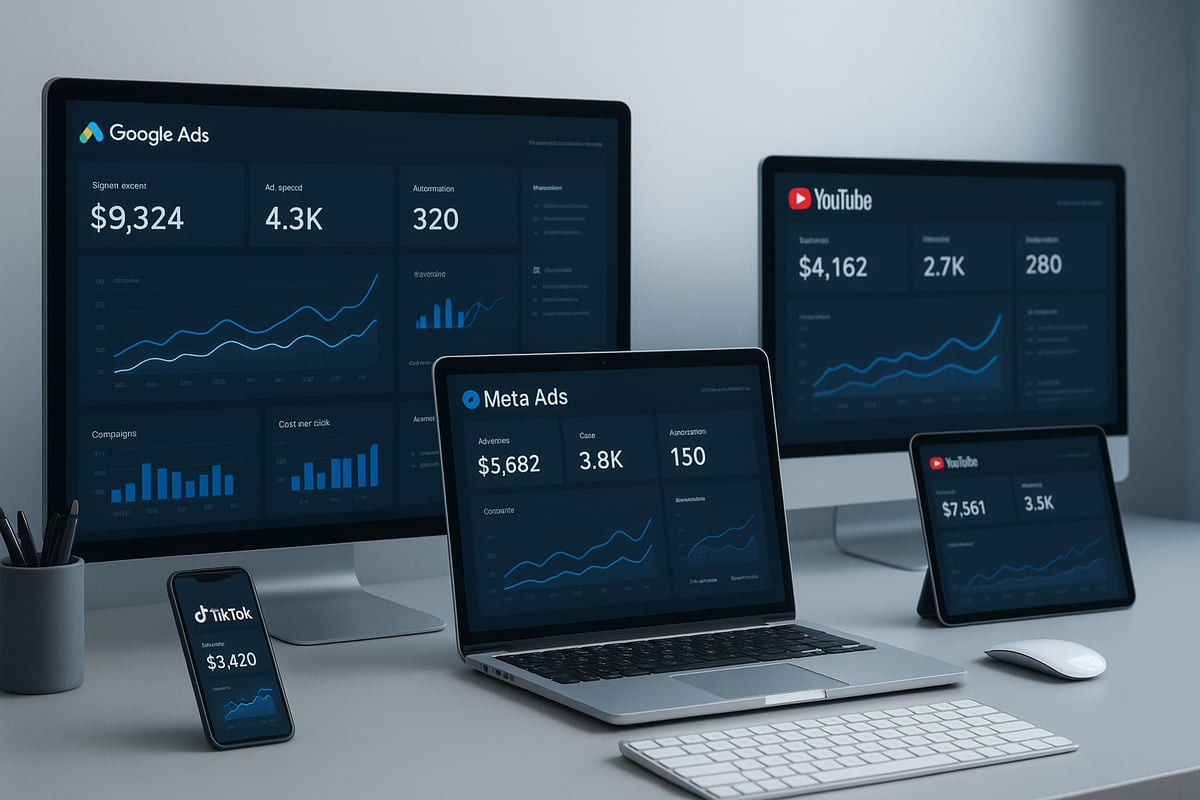
With the pay per click marketing landscape evolving at a rapid pace, understanding the top advertising platforms and their latest innovations is critical for sustained success. Each platform offers unique strengths, targeting options, and creative formats that can shape your 2025 strategy.
Google Ads: Search, Display, and Shopping
Google Ads remains the cornerstone of pay per click marketing in 2025, thanks to its unrivaled search volume and advanced advertising ecosystem. Businesses leverage search ads to target users with high purchase intent, while the Display Network builds brand awareness across millions of sites. Shopping ads are essential for ecommerce, showcasing product visuals and pricing directly in search results. New features, such as AI-driven bidding and Performance Max campaigns, enable smarter budget allocation and audience targeting. Seamless integration with Google Analytics 4 provides deeper performance insights. For many, Google Ads is the first step in a robust pay per click marketing strategy.
Meta Ads: Facebook and Instagram
Meta Ads, covering Facebook and Instagram, are indispensable for pay per click marketing campaigns aiming for both B2C and B2B audiences. The platforms offer diverse ad formats including image, video, carousel, Stories, and Reels. Advanced audience targeting uses lookalikes and custom audiences, while AI-powered campaign optimization, such as Advantage+, streamlines performance. Meta is pushing toward full automation, as highlighted in Meta's AI automation plans, which signals a future where AI will handle most aspects of campaign management. Compliance tools help regulated industries maintain adherence to strict advertising guidelines, making Meta a leader in adaptable pay per click marketing.
LinkedIn Ads: B2B Lead Generation
LinkedIn Ads is the premier platform for B2B pay per click marketing, specializing in professional targeting. Sponsored Content, InMail, and Lead Gen Forms enable precise engagement with decision-makers based on job title, company size, and industry. Integration with CRM platforms ensures seamless lead management and drives higher conversion rates. In 2025, LinkedIn’s AI-driven audience expansion tools enhance campaign reach without sacrificing lead quality. Although cost per click is typically higher, the advanced segmentation and professional context deliver exceptional value for businesses seeking high-quality leads through pay per click marketing.
Emerging Platforms: TikTok, YouTube, and Others
The pay per click marketing ecosystem now includes fast-growing platforms like TikTok, YouTube, Pinterest, and Reddit. TikTok excels at reaching younger audiences with short-form, engaging video ads. YouTube offers a variety of formats such as skippable, non-skippable, bumper, and overlay ads, making it ideal for educational and brand storytelling content. Interactive and shoppable ad formats are on the rise, allowing users to engage directly with products. Niche platforms like Pinterest and Reddit offer specialized targeting and creative opportunities, expanding the horizons of pay per click marketing beyond traditional channels.
Platform Comparison and Selection Criteria
Choosing the right platform for pay per click marketing requires careful evaluation. Consider audience alignment, cost metrics, creative requirements, and compliance needs. The table below summarizes key selection criteria for each platform:
| Platform | Audience Focus | Avg. CPC | Key Formats | Compliance Level |
|---|---|---|---|---|
| Google Ads | All, high intent | $$ | Search, Display, Shopping | Medium |
| Meta Ads | B2C, B2B | $ | Image, Video, Stories | High |
| B2B, professionals | $$$ | Sponsored, InMail | High | |
| TikTok | Gen Z, Millennials | $ | Video, Interactive | Medium |
| YouTube | Broad, visual | $$ | Video, Overlay | Medium |
Test multiple platforms to discover the best fit for your pay per click marketing goals, and regularly review performance to adapt your strategy in 2025.
Advanced PPC Strategies and AI Optimization for 2025
Staying ahead in pay per click marketing requires mastering advanced strategies and embracing the latest technology. In 2025, the landscape is driven by AI, automation, and an integrated approach across platforms. Let us explore the most impactful tactics for scaling your campaigns and maximizing return on investment.
AI and Automation in PPC
Artificial intelligence is transforming pay per click marketing in 2025. AI-powered bidding tools analyze historical data and user intent to optimize bids in real time, maximizing conversions and controlling costs. Machine learning segments audiences more effectively and predicts which users are most likely to convert.
Automated ad creation and dynamic content generation further reduce manual effort. Predictive analytics help forecast campaign performance, making proactive adjustments possible. Leading agencies leverage AI for growth, as highlighted in Publicis' AI-driven growth. While automation increases efficiency, human oversight remains crucial for strategy and creative direction.
Personalization and Dynamic Creative
Personalization is essential in pay per click marketing. Dynamic ad formats tailor messaging based on audience segment, location, and even time of day. Marketers use geo-targeting and time-based variations to increase relevance and engagement.
First-party data integration enables individualized experiences, such as retargeting site visitors with offers specific to their interests. Dynamic keyword insertion can boost ad relevance and Quality Score. Testing personalized versus generic creatives often reveals better engagement, but privacy compliance must always be considered.
Cross-Channel and Omnichannel PPC Integration
Effective pay per click marketing in 2025 means coordinating campaigns across search, social, display, and video platforms. Unified reporting and multi-touch attribution models are essential for understanding the customer journey.
For example, combining Google and Meta Ads provides full-funnel coverage, while retargeting across devices ensures consistent brand messaging. Leveraging CRM data for cross-channel targeting helps maintain audience relevance. Marketers must address attribution challenges to accurately measure impact and optimize spend.
Conversion Rate Optimization (CRO) and Landing Page Best Practices
Conversion rate optimization is a cornerstone of pay per click marketing. Dedicated landing pages for each campaign ensure message match and improve Quality Score. A/B and multivariate testing of headlines, forms, and calls to action reveal what resonates most with users.
Mobile-first design and fast loading speeds are now non-negotiable. Trust signals such as reviews, certifications, and security badges build credibility. Aligning ad copy with landing page content drives higher conversions and supports ongoing optimization.
Scaling and Diversifying PPC Campaigns
Scaling pay per click marketing involves increasing budgets, expanding keyword lists, and adding new platforms. Diversification reduces risk by spreading investment across multiple channels. For example, adding TikTok or LinkedIn to existing Google campaigns can reach untapped audiences.
Lookalike and similar audience expansion, combined with automation, allows for efficient scaling while maintaining control. Marketers should monitor for diminishing returns and be prepared to pause or sunset underperforming campaigns as needed.
How Financial Advisors Can Leverage PPC for Lead Generation
Financial advisors operate in a highly regulated and competitive environment, making pay per click marketing an invaluable tool. Targeted lead generation campaigns on platforms like Facebook and Google deliver measurable ROI while maintaining compliance.
Solutions such as Bizware.AI offer done-for-you PPC management, ad creative, and automation specifically for financial advisors. Automated follow-up and an all-in-one dashboard streamline campaign oversight and performance tracking. Advisors using Bizware.AI have reported reduced marketing overhead and improved lead quality, simplifying their client acquisition process.
Compliance, Privacy, and Future-Proofing Your PPC Strategy
Staying ahead in pay per click marketing requires more than just smart bidding and creative ads. In 2025, compliance, privacy, and adaptability are crucial for marketers seeking long-term success. Let's explore how to secure your PPC campaigns against regulatory risks and prepare for the future of digital advertising.
Navigating Compliance and Industry Regulations
Compliance is a cornerstone of pay per click marketing, especially for regulated sectors such as finance and healthcare. Ad platforms, including Google and Meta, enforce strict policies around content, disclosures, and targeting. For example, Facebook’s compliance tools help advertisers meet requirements for financial ads by providing documentation and transparent review processes.
Key compliance steps include:
- Reviewing platform-specific ad policies regularly
- Documenting campaign approvals and disclaimers
- Running periodic audits to ensure adherence
Consequences of non-compliance can range from ad disapproval to account suspension. Transparent ad copy and clear disclaimers are essential for building trust and maintaining campaign continuity in pay per click marketing.
Privacy Changes and Data Protection
With third-party cookies being phased out, privacy is reshaping pay per click marketing strategies. Marketers must prioritize first-party data collection, user consent, and transparent communication. Regulations like GDPR and CCPA now require explicit permission before tracking or retargeting users.
Effective data protection involves:
- Using CRM data for compliant audience segmentation
- Implementing privacy-safe tracking solutions
- Clearly communicating data usage policies
Building user trust through transparency and robust data handling is now a competitive advantage. Privacy changes will continue to influence how pay per click marketing campaigns are targeted and measured in 2025.
Measuring and Reporting PPC Performance in 2025
Accurate measurement is vital for successful pay per click marketing. Advanced tools like Google Analytics 4 and Meta’s Conversion API enable marketers to track conversions and attribute results across multiple touchpoints. Multi-touch attribution models help reveal the true value of each campaign element.
To maximize insights:
- Set up conversion tracking for every channel
- Use dashboards for data visualization
- Benchmark against industry standards
Financial advisors, for example, can track lead journeys from ad click to appointment, optimizing spend and demonstrating ROI. Automating reports saves time and ensures stakeholders receive actionable insights from pay per click marketing efforts.
Future-Proofing Your PPC Strategy
The digital landscape is always evolving, so future-proofing is essential in pay per click marketing. Marketers should stay up-to-date with platform updates, invest in ongoing learning, and build flexible campaign structures that adapt to regulatory or market shifts.
Consider these future-proofing tips:
- Attend webinars and pursue certifications
- Develop in-house expertise to reduce reliance on agencies
- Scenario plan for budget and resource allocation
Quick pivots during regulatory changes or market disruptions can safeguard results. Investing in creative innovation and new technology ensures your pay per click marketing strategy remains resilient and effective.
Key PPC Trends to Watch Beyond 2025
Looking ahead, several trends will shape pay per click marketing. AI and automation are transforming campaign management, with nearly 90 percent of advertisers adopting generative AI for video ads, according to the IAB's generative AI in video ads report. Voice and visual search advertising will become more prominent, while privacy-first targeting and contextual ads take center stage.
| Trend | Impact on PPC |
|---|---|
| AI and automation | Smarter bidding, creative |
| Voice & visual search | New ad formats, targeting |
| Privacy-first strategies | Contextual targeting |
| Channel integration | Unified campaigns |
| Brand trust | Increased importance |
As competition and CPCs rise, brand transparency and trust will be key differentiators in pay per click marketing.
After exploring the latest PPC strategies, AI-driven optimizations, and compliance must-haves for 2025, you’re likely seeing how much potential there is for financial advisors ready to lead the way. If you want to put these insights into action and see how expertly crafted ad campaigns can generate real results for your practice, I encourage you to experience it firsthand. Discover how tailored PPC solutions, automation, and smart follow-up can help you maximize ROI and simplify your marketing.
Schedule a Free Demo and see what’s possible for your business.
.png)


.svg)
.svg)