Google Adwords SEO vs Organic SEO: Key Differences 2025
In 2025, the digital landscape is more competitive than ever, making the right marketing strategy essential for business growth. Companies must choose between google adwords seo and Organic SEO to boost their online visibility and reach new customers.
This article will explore the key differences between these two powerful approaches. We will break down how each method operates, compare costs and timelines, examine targeting options, and discuss long-term value.
By the end, you will gain practical insights and expert advice to decide which path best aligns with your goals. Ready to discover which strategy will help your business thrive?
Understanding Google Adwords SEO
In today's digital landscape, businesses face immense pressure to stand out online. Google adwords seo has become a cornerstone for those seeking rapid visibility and measurable results. This practice revolves around leveraging paid search ads to secure top spots on Google's search engine results pages, making it a go-to solution for immediate exposure.
What is Google Adwords SEO?
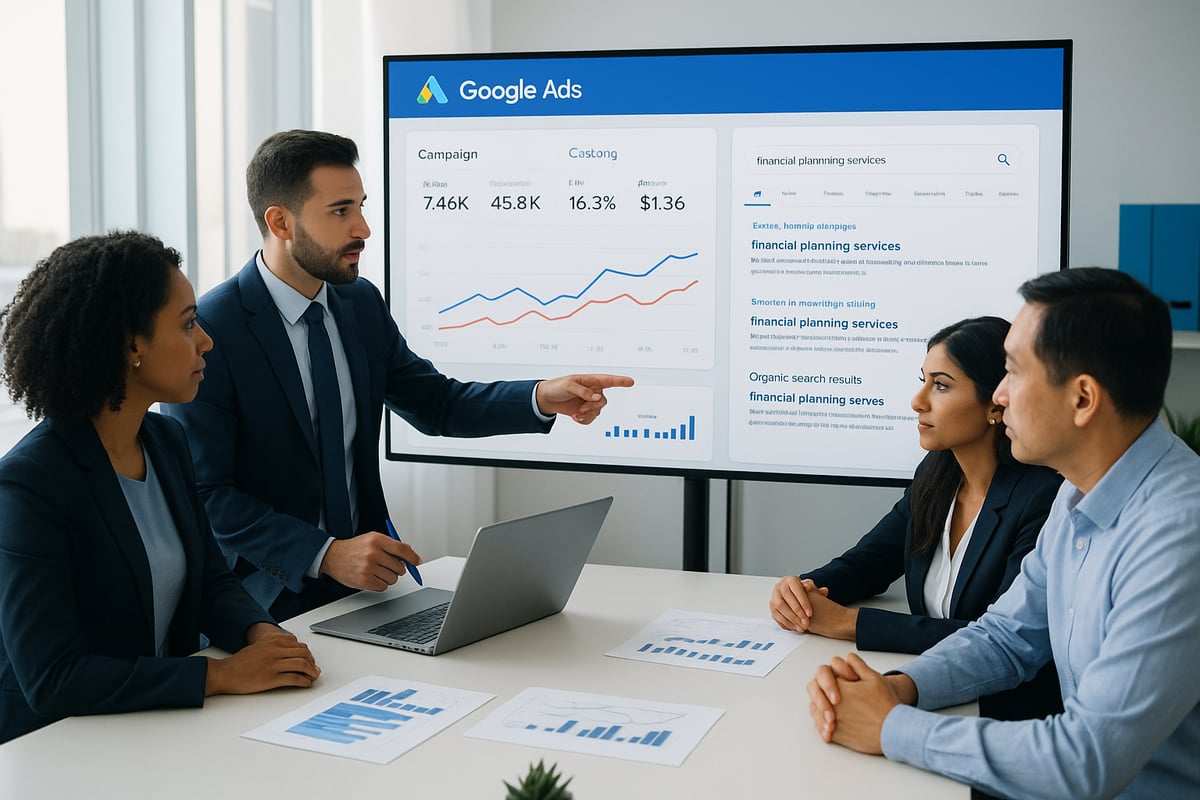
Google adwords seo refers to the use of paid search advertising on Google Ads to achieve prominent placement at the top of search engine results. Businesses bid on keywords relevant to their services, ensuring their ads appear above organic listings. This model operates on a pay-per-click basis, granting advertisers control over budget and ad copy.
Key features include immediate visibility, customizable messaging, and access to advanced targeting options. For example, a financial advisor might bid on "retirement planning services" to reach high-intent prospects instantly. In 2025, AI-driven ad optimization and smarter bidding algorithms are enhancing campaign efficiency. Notably, paid search ads account for 45% of clicks on SERPs, highlighting the significant role of google adwords seo in capturing searcher attention.
Pros and Cons of Google Adwords SEO
Google adwords seo offers both distinct advantages and limitations. Let’s break them down:
| Pros | Cons |
|---|---|
| Fast results | Ongoing costs |
| Precise audience targeting | Temporary visibility |
| Measurable ROI | Risk of ad fatigue |
| Flexible budgeting | Need for constant optimization |
Advertisers benefit from rapid lead generation, detailed performance data, and the flexibility to scale campaigns up or down. However, costs can accumulate quickly, and visibility disappears once spending stops. For instance, a financial advisory firm may see new leads within days, but ongoing investment is required to sustain momentum. In the finance sector, the average cost per click is $3.44, making budget management crucial for google adwords seo success.
Best Use Cases for Google Adwords SEO
Certain business scenarios make google adwords seo especially effective. It excels when launching new products or services, entering unfamiliar markets, or running seasonal promotions. The ability to target by location, device, and search intent allows businesses to reach their ideal audience quickly.
For example, during tax season, financial advisors can deploy focused ad campaigns to attract clients seeking urgent advice. Google adwords seo is also valuable for testing new offers or competing in highly competitive niches where organic ranking is difficult to achieve quickly. The immediacy and flexibility of paid ads give businesses the agility to respond to market changes and capitalize on timely opportunities.
Common Misconceptions about Google Adwords SEO
Despite its popularity, google adwords seo is often misunderstood. One myth is that paid ads directly influence organic rankings, which is not the case, as Google uses separate algorithms for paid and organic results. Another misconception is that only large companies can afford Google Ads, yet small businesses can compete effectively with careful targeting and budget control.
Some believe that setting up a campaign is a one-time task, but ongoing optimization is essential for sustained performance. In reality, 72% of small businesses use Google Ads for lead generation, showing its accessibility and impact. Understanding the true nature of google adwords seo helps businesses set realistic expectations and achieve better results.
Understanding Organic SEO
Organic SEO is the process of optimizing your website and its content to earn high rankings in search engine results naturally, without paying for placement. Unlike google adwords seo, which relies on paid ads for immediate visibility, organic SEO builds authority over time through quality content, technical optimization, and strategic link building.
In 2025, organic SEO is evolving rapidly. New trends include the use of AI-generated content, a focus on E-E-A-T (Experience, Expertise, Authoritativeness, Trustworthiness), and deeper integration of semantic search. For example, a financial advisor might use organic SEO to rank a blog post on "best retirement strategies," attracting clients seeking in-depth expertise.

Pros and Cons of Organic SEO
Organic SEO offers several compelling advantages. First, it delivers sustainable website traffic and builds credibility, which compounds into higher ROI over time. Unlike google adwords seo, there are no direct costs for each click, making organic search a cost-effective long-term strategy.
However, organic SEO requires patience. Results often take months to materialize, and ongoing investment in content and technical improvements is essential. Algorithm updates can also impact rankings, adding a layer of unpredictability.
For instance, a financial advisory firm might experience steady traffic growth over 12 months through consistent content marketing. Notably, SEO delivers 2.6× higher ROI than paid search, highlighting the long-term value of organic efforts.
Best Use Cases for Organic SEO
Organic SEO is ideal for businesses aiming to build brand authority and trust. It is especially effective for long-term lead generation and content-driven marketing strategies. When compared to google adwords seo, organic approaches excel at demonstrating niche expertise and supporting evergreen content.
Some of the best use cases include:
- Publishing in-depth guides and thought leadership articles
- Creating educational resources for clients
- Showcasing case studies and testimonials
For example, financial advisors can publish comprehensive guides on retirement planning, positioning themselves as industry experts and attracting clients over time.
Common Misconceptions about Organic SEO
Several myths still surround organic SEO. One common misconception is that SEO is a one-time task, when in reality, ongoing optimization is necessary to maintain and improve rankings. Some believe that only keywords matter, yet user experience and content quality are equally crucial.
Another frequent misunderstanding is that organic SEO is free. While there are no direct charges like in google adwords seo, significant investment in content creation, technical tools, and expertise is required.
Finally, it is important to note that 75 percent of users never scroll past the first page of search results, emphasizing the need for continuous effort to secure top positions and maximize visibility.
Key Differences Between Google Adwords SEO and Organic SEO
Navigating the digital landscape in 2025 means understanding how google adwords seo compares with organic SEO across crucial areas. Below, we break down the most important differences to help you make informed decisions for your business.

Cost Structure and Budgeting
When evaluating google adwords seo versus organic SEO, cost differences are striking. Google adwords seo operates on a pay-per-click model, meaning you pay for each visitor who clicks your ad. Budgets are flexible and can be adjusted daily. In contrast, organic SEO requires upfront investment in content, technical improvements, and ongoing optimization. While the initial spend for organic SEO may seem high, it often pays off over time as rankings improve.
Here’s a quick comparison:
| Aspect | Google Adwords SEO | Organic SEO |
|---|---|---|
| Payment Model | Pay-per-click | Upfront and ongoing |
| Budget Control | Daily flexibility | Long-term planning |
| Cost Timeline | Immediate | Gradual, compounding |
Ultimately, google adwords seo is ideal for quick results, while organic SEO favors those focused on sustainable growth.
Speed of Results
Speed is a major factor distinguishing google adwords seo from organic SEO. With google adwords seo, your ads can appear at the top of search results almost instantly after campaign launch. This immediacy is perfect for businesses needing quick traction or promoting time-sensitive offers.
On the other hand, organic SEO is a slower process. It takes months of consistent effort to see significant ranking improvements and increased traffic. According to recent data, 60% of marketers report that SEO results become noticeable after six months.
If your strategy demands immediate visibility, google adwords seo delivers. For those willing to invest time for lasting impact, organic SEO is the way forward.
Visibility and Click-Through Rates
Visibility and click-through rates (CTR) present another clear distinction between google adwords seo and organic SEO. Paid ads from google adwords seo typically appear above organic results, capturing attention right away. However, some users intentionally skip ads and go straight to organic listings, which often earn higher trust and credibility.
Recent studies show that organic results receive 70-80% of all clicks, while paid ads account for 20-30%. This suggests that although google adwords seo guarantees placement, organic SEO can achieve better engagement over time.
Both approaches have unique strengths, so aligning your strategy with user behavior is critical.
Targeting and Audience Reach
Targeting capabilities set google adwords seo apart. With google adwords seo, you can define your audience by demographics, location, device, and even specific search intent. This level of precision allows for highly tailored campaigns that reach exactly who you want, when you want.
Organic SEO, however, relies on content relevance and broader reach. While you can optimize for certain keywords and topics, you have less immediate control over who sees your content.
To maximize both strategies, consider integrating digital tools for financial advisors that support campaign management, audience segmentation, and performance tracking.
Longevity and Sustainability
The sustainability of google adwords seo and organic SEO differs greatly. Traffic from google adwords seo disappears as soon as you pause or end your campaign, making it a short-term solution. In contrast, organic SEO builds momentum over time. Once your content ranks well, it continues to attract visitors without ongoing direct costs.
This compounding effect is a key reason many businesses invest in organic SEO for long-term lead generation. Still, google adwords seo is valuable for immediate traffic spikes or launching new offers.
Balancing both can help maintain consistent visibility and growth.
Algorithm and Platform Dependency
Both google adwords seo and organic SEO depend on Google’s platform, but in different ways. Google adwords seo is subject to changes in ad policies, bidding competition, and platform updates. This can impact costs and campaign effectiveness overnight.
Organic SEO, meanwhile, is vulnerable to search algorithm updates, which can alter rankings and traffic. However, it carries less direct cost risk if an algorithm change occurs.
Staying agile and monitoring both google adwords seo and organic SEO performance is essential for adapting to any platform changes.
Performance Measurement and Analytics
Measuring the effectiveness of your digital marketing efforts is crucial for optimizing both google adwords seo and organic strategies. Knowing which metrics to track and how to interpret them will guide your decisions and maximize ROI.
Metrics for Google Adwords SEO
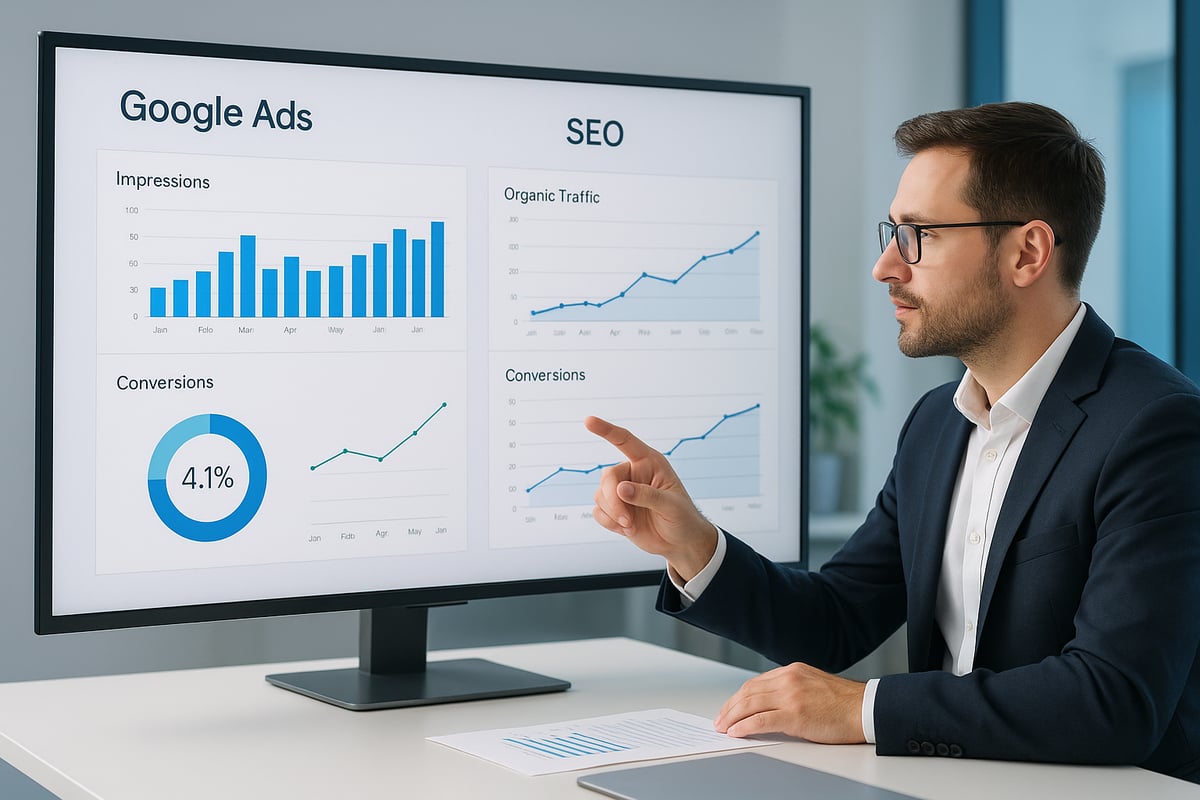
When evaluating google adwords seo, focus on metrics such as impressions, clicks, click-through rate (CTR), conversion rate, and cost per acquisition (CPA). These indicators offer immediate feedback on campaign performance.
For example, a financial advisor running a lead generation campaign should monitor how many users see their ads, how many click through, and how many convert into leads. Real-time data allows for rapid adjustments if results fall short of expectations. According to recent benchmarks, the Google Ads average CTR is 6.42%, giving you a reference point for evaluating your own campaigns.
Metrics for Organic SEO
Organic SEO performance is measured through keyword rankings, organic traffic, bounce rate, dwell time, and the number and quality of backlinks. Tools like Google Analytics, Search Console, and SEMrush provide insights into these key areas.
For google adwords seo users looking to diversify, tracking growth in organic leads over time is essential. Advisors can use lead generation tools for advisors to support both paid and organic efforts, ensuring consistent measurement across channels. Monitoring these metrics reveals the long-term impact of content and technical optimizations.
Attribution and ROI Analysis
Proper attribution is vital when analyzing the ROI of google adwords seo and organic campaigns. Many conversions involve multiple touchpoints, making it challenging to assign credit to a single channel.
Multi-touch attribution models help identify which steps in the customer journey drive conversions. Combining data from google adwords seo and organic sources paints a more accurate picture of what works. For example, a financial advisor may see that initial discovery happens via SEO, but final conversion occurs after seeing a paid ad.
Adapting Strategies Based on Data
Continuous improvement is key to successful google adwords seo and organic strategies. Use analytics to refine campaigns, split-test ad creatives, and A/B test landing pages for better conversion rates.
For SEO, conduct content gap analyses and technical audits to uncover new opportunities. Regularly reviewing data ensures your approach stays effective. In fact, 81% of marketers rely on data insights to enhance their SEO and SEM strategies, reinforcing the importance of data-driven decision-making.
Choosing the Right Approach for Your Business in 2025
Selecting between google adwords seo and organic SEO is a pivotal decision for any business in 2025. Your choice will shape how quickly you gain visibility, the type of leads you attract, and how you allocate resources for growth.
Assessing Business Goals and Resources
The first step in choosing between google adwords seo and organic SEO is to clarify your objectives and resources. Are you seeking immediate leads, or is your priority long-term brand authority? If quick results are essential, google adwords seo offers instant visibility. However, if you have the patience and resources for gradual growth, organic SEO provides compounding benefits.
Budget is another key factor. Google adwords seo allows for flexible daily spend, while organic SEO demands ongoing investment in content and technical optimization. Assess your in-house expertise as well. Do you have a team skilled in campaign management, or will you need to outsource? Align your strategy with your business's unique needs and capabilities.
Industry and Competition Considerations
Your industry's landscape plays a significant role in determining the effectiveness of google adwords seo versus organic SEO. Highly regulated sectors like finance, healthcare, and legal often see higher cost-per-click rates, making paid campaigns a substantial investment. In contrast, niche markets may offer more affordable opportunities for organic growth with google adwords seo supplementing visibility.
Analyze your competition's digital presence. If competitors dominate organic rankings, a targeted google adwords seo campaign can help you break through. Conversely, less crowded niches may allow you to build authority with content-driven SEO. For more guidance, explore curated growth strategies for advisors to understand how industry peers balance these channels.
Combining Adwords and Organic SEO for Maximum Impact
An integrated approach often yields the strongest results. By leveraging google adwords seo for immediate exposure and organic SEO for long-term sustainability, you can maximize reach and ROI. For example, promoting new content or events through google adwords seo while building organic rankings ensures you engage audiences at every stage.
Here’s a quick comparison:
| Strategy | Speed | Cost Structure | Longevity |
|---|---|---|---|
| Google Adwords SEO | Instant | Pay-per-click | Short-term |
| Organic SEO | Gradual | Upfront/Ongoing | Long-term |
Businesses using both see up to 25 percent higher conversion rates. Consider integrating marketing automation for financial advisors to streamline campaign management and enhance results.
Common Pitfalls and How to Avoid Them
Relying solely on google adwords seo or organic SEO can limit your growth. Avoid these common mistakes:
- Over-investing in one channel without diversifying.
- Neglecting ongoing optimization and data analysis.
- Focusing on traffic but ignoring user experience and landing page quality.
- Assuming google adwords seo or SEO is a one-time setup.
Regularly review campaign data, update your content, and test landing pages to maintain performance. Ensure your website delivers a seamless experience for visitors from both channels.
Future Trends and Innovations in 2025
Looking ahead, the evolution of google adwords seo and organic SEO will be driven by AI, automation, and changing privacy regulations. Expect smarter bidding algorithms, enhanced targeting capabilities, and increased reliance on voice and visual search.
Financial advisors and other professionals should prepare for tighter data privacy rules that may impact how you target and track prospects. Staying agile and informed will help you adapt your google adwords seo and SEO strategies for ongoing success.
Expert Insights and Actionable Tips
Industry leaders recommend balancing google adwords seo with organic SEO to create a resilient digital marketing strategy. Begin by defining clear goals, allocating budget wisely, and leveraging tools for analytics and automation.
Follow this action plan:
- Audit your current digital presence.
- Launch targeted google adwords seo campaigns for quick wins.
- Develop high-quality, authoritative content for organic growth.
- Monitor performance with robust analytics tools.
- Adjust tactics based on data insights.
For more resources, review proven growth strategies for advisors to strengthen your approach in 2025.
After exploring the unique benefits and challenges of both Google Adwords SEO and Organic SEO for financial advisors in 2025, you might be wondering which strategy fits your firm’s growth goals best. The right balance can help you generate high quality leads, control costs, and build long term authority online. If you’re ready to see how a tailored approach could elevate your visibility and results, I invite you to take the next step. Let’s walk through the options together and discover what works for your business—Schedule a Free Demo.
.png)


.svg)
.svg)