B2B Email Marketing Guide 2025: Expert Tactics for Success
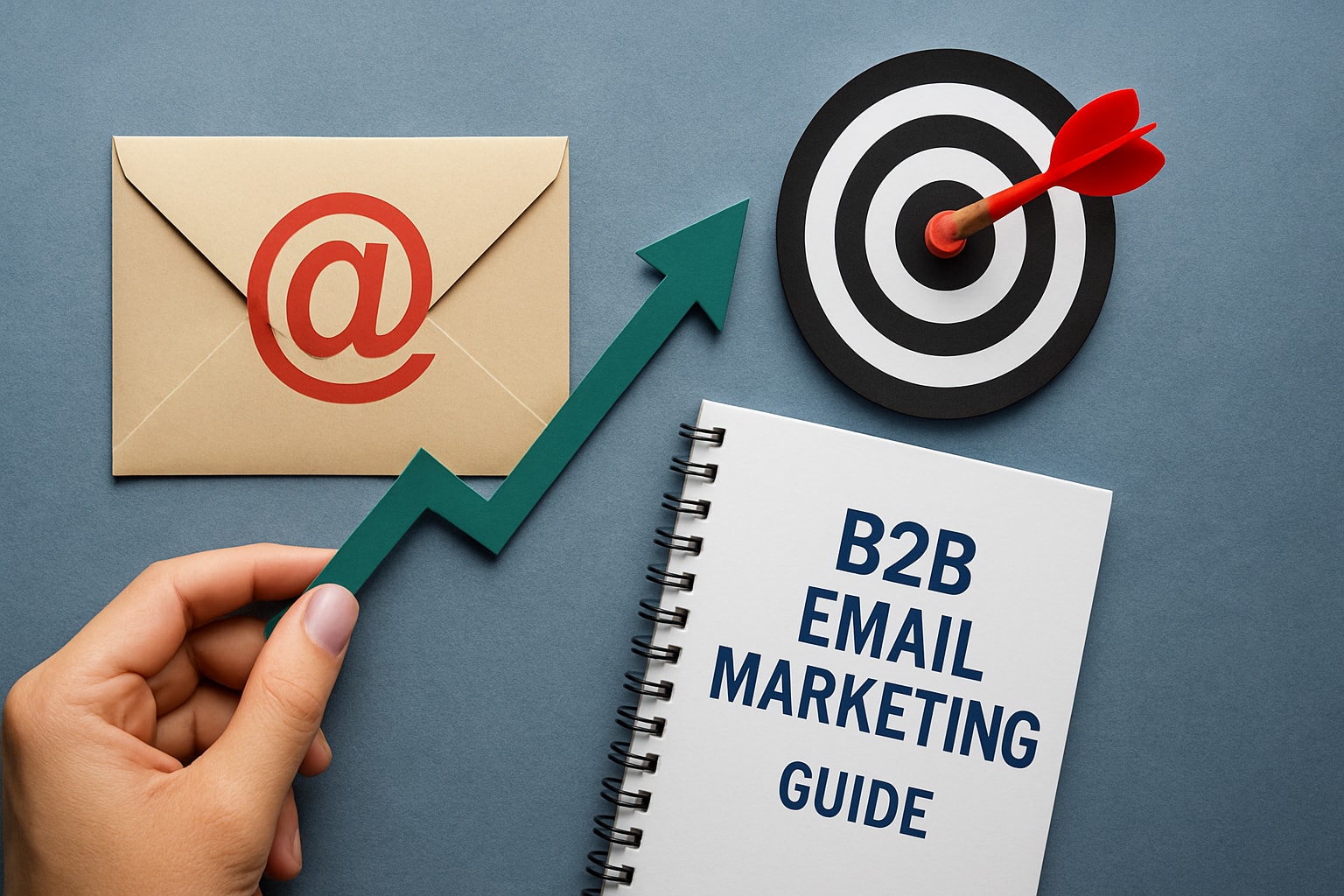
The digital B2B space is evolving rapidly, making b2b email marketing more competitive and essential than ever as we approach 2025. Standing out in crowded inboxes and reaching the right decision-makers requires a new level of strategy and expertise.
This comprehensive guide is designed to equip you with expert tactics and proven strategies to elevate your b2b email marketing results in the coming year. Whether you’re refining your current approach or starting fresh, you’ll find actionable insights to drive measurable outcomes.
You’ll discover the fundamentals of b2b email marketing, key differences from B2C strategies, detailed campaign planning methods, advanced personalization tactics, and the latest automation and measurement techniques.
Are you ready to future-proof your campaigns and outperform your competitors? Dive in to learn what separates high-performing marketers and unlock the full potential of b2b email marketing in 2025.
Understanding B2B Email Marketing in 2025
B2B email marketing is evolving rapidly, driven by new technologies and shifting buyer expectations. In 2025, staying competitive means understanding how strategies have changed and which tactics deliver the highest impact. This section explores what sets b2b email marketing apart, the trends shaping its future, why it remains a top channel, and the obstacles marketers must overcome.

Defining B2B Email Marketing
B2B email marketing is focused on building lasting relationships, nurturing leads, and driving sales between businesses. Unlike B2C marketing, which targets individual consumers, b2b email marketing tailors its messaging to decision-makers within organizations. The primary goals are to deliver value, educate, and guide prospects through complex buying processes. Common examples include newsletters, product updates, and personalized offers that address specific business needs. In a B2B context, communication is precise, data-driven, and designed to foster trust over time.
The State of B2B Email Marketing: Trends & Data
B2B email marketing continues to be a powerhouse in digital strategy. In 2025, 91% of marketers identify email as their most critical channel. The average ROI is impressive, returning $30 to $40 for every dollar spent. Personalization and segmentation are now essential, as buyers expect tailored experiences. There is also a significant rise in the use of AI and automation tools, streamlining campaign management and enhancing relevance. For more insights and up-to-date figures, see the B2B Email Marketing Statistics 2025.
| Metric | 2025 Value |
|---|---|
| Marketers prioritizing email | 91% |
| Average ROI per $1 spent | $30–$40 |
| Click increase from segmentation | +100.95% |
Why B2B Email Marketing Still Delivers ROI
B2B email marketing remains effective because it enables direct, personal communication at scale. Unlike social media or paid ads, email bypasses public feeds and lands directly in the inbox of decision-makers. Segmented campaigns deliver 100.95% more clicks and achieve open rates 14.31% higher than non-segmented ones. Companies that use b2b email marketing as a primary lead generation channel report stronger engagement and higher conversion rates. This direct approach supports detailed nurturing and aligns closely with longer B2B sales cycles.
Key Challenges Facing B2B Email Marketers
Despite its strengths, b2b email marketing faces several challenges in 2025. Inbox overload is a growing issue, as recipients are flooded with messages and have shorter attention spans. Marketers must also navigate strict regulations such as GDPR and CAN-SPAM, ensuring compliance and deliverability. The complexity of B2B buying cycles, involving multiple stakeholders, adds further difficulty. To stand out, campaigns must offer high-quality, relevant content that speaks directly to business pain points and needs.
How B2B Email Marketing Differs from B2C: Strategy Essentials
Understanding how b2b email marketing stands apart from B2C is essential for building high-performance campaigns. The strategic differences span the entire process, from targeting and messaging to compliance and measurement.

The B2B Buyer’s Journey & Sales Cycle
B2B email marketing revolves around a longer, more complex sales cycle than B2C. Decisions typically require multiple touchpoints, nurturing leads over weeks or even months. Unlike quick B2C purchases, B2B buyers often consult with committees or stakeholders before moving forward.
A well-structured b2b email marketing strategy maps content to each stage of the buyer’s journey. For example, initial emails might focus on awareness, offering insights or industry reports, while later messages address specific solutions or case studies. By aligning communication to each phase, marketers can move prospects closer to a decision.
According to B2B Email Marketing Insights & Stats, top-performing B2B campaigns leverage this multi-stage approach for higher conversion rates.
Personalization & Segmentation in B2B
Personalization is non-negotiable in b2b email marketing. Unlike B2C, where broad appeals may work, B2B audiences expect communications tailored to their industry, job role, or business needs. Granular segmentation helps deliver the right message to the right person at the right time.
For instance, segmenting by company size or decision-maker level allows you to send C-suite executives high-level industry insights, while department managers receive tactical guides. Using buyer personas to inform email copy and offers ensures relevance and increases engagement.
Effective b2b email marketing segmentation not only boosts open rates, it also reduces unsubscribes and strengthens relationships with key accounts.
Content Types & Tone for B2B Audiences
The content and tone in b2b email marketing are distinctly different from B2C. B2B recipients value educational, data-driven resources that help them make informed business decisions, while B2C often focuses on entertainment or impulse offers.
| Content Type | B2B Example | B2C Example |
|---|---|---|
| Educational | Whitepapers, webinars | How-to videos |
| Product Updates | Feature launches | New arrivals |
| Case Studies | Success stories | Customer reviews |
| Offers | Personalized demos | Flash sales |
A professional, authoritative tone builds credibility and trust with B2B audiences. Sharing case studies, research, and actionable insights positions your brand as a valuable partner rather than just a vendor.
Compliance, Privacy, and Opt-In Best Practices
B2B email marketing must navigate strict data privacy regulations such as GDPR and CAN-SPAM. Compliance is not optional—non-compliance can result in penalties and damage your reputation.
Best practices include:
- Gaining explicit opt-in from every contact
- Using double opt-in processes for added confirmation
- Providing clear preference centers for subscribers
- Regularly updating privacy policies and communicating data use
A transparent approach not only keeps your b2b email marketing within legal bounds, it also builds trust with your audience. Prioritizing compliance from the start ensures your campaigns reach the inbox and deliver results.
Step-by-Step: Building a High-Performance B2B Email Campaign
A successful b2b email marketing campaign requires a strategic, methodical approach. Each step in the process builds upon the last, ensuring your efforts generate measurable impact. Below, we break down the eight essential steps to elevate your b2b email marketing results in 2025.

Step 1: Define Clear Goals & KPIs
Begin every b2b email marketing campaign by setting specific objectives. Are you aiming to generate leads, nurture prospects, drive sales, or boost client retention? Align your goals with your company’s broader marketing and sales strategy.
Identify KPIs to measure progress. Common metrics include open rates, click-through rates (CTR), conversions, and overall ROI. For instance, you might set a goal to achieve a 20 percent increase in qualified leads. Clear targets keep your team focused and enable data-driven decisions at every stage.
| Goal Type | Example KPI |
|---|---|
| Lead Generation | # of new leads/month |
| Nurturing | % increase in engagement |
| Sales | Conversion rate |
| Retention | Churn reduction rate |
Step 2: Build & Segment Your Email List
A high-performing b2b email marketing campaign starts with a robust, well-segmented list. Grow your list using tactics like gated content, webinars, and in-person or virtual events. Segmentation is crucial—divide contacts by firmographics, behaviors, and engagement levels to deliver relevant messages to each group.
For deeper insights on effective list-building tools, see this Lead generation tools overview. Create separate lists for prospects, existing clients, and partners to tailor your outreach. Remember, segmentation can yield open rates over 14 percent higher than generic sends.
Step 3: Map Content to the B2B Buyer’s Journey
Align your email content with each stage of the buyer’s journey: awareness, consideration, and decision. Early-stage emails should educate and inform, while later-stage messages can highlight product benefits and case studies.
Use drip campaigns to nurture leads over time, providing value at every touchpoint. Dynamic content blocks allow you to personalize messaging based on where a recipient is in the journey. This approach ensures your b2b email marketing remains relevant and impactful throughout the sales cycle.
Step 4: Craft Compelling, Value-Driven Content
Effective b2b email marketing relies on clear, benefit-focused communication. Write subject lines that promise value and deliver content that addresses your audience’s pain points. Incorporate storytelling, case studies, and data to build credibility.
For example, share a recent client success story or highlight unique product features that solve real-world problems. Avoid overly promotional language—focus on delivering solutions and insights that resonate with decision-makers.
- Use data to support claims
- Highlight customer testimonials
- Share actionable tips
Step 5: Design for Deliverability & Engagement
The design of your b2b email marketing messages plays a significant role in performance. Optimize templates for mobile devices and ensure accessibility for all users. Use scannable layouts, clear calls to action, and consistent branding throughout.
Experiment with A/B testing on subject lines, visuals, and content blocks to find what resonates best. Reference proven templates for transactional, relationship-building, and lead-nurturing emails. Even small tweaks can lead to higher open and click rates.
Step 6: Automate Workflows & Personalization
Automation is a cornerstone of scalable b2b email marketing. Set up triggered emails for events like sign-ups, re-engagement, or post-event follow-ups. Leverage marketing automation platforms to segment audiences and time your sends for maximum impact.
An example is an automated onboarding series for new leads, guiding them through key resources and building trust from the outset. Automation ensures timely, relevant communication while freeing your team to focus on strategy.
Step 7: Test, Measure, and Optimize
Continuous improvement is vital for b2b email marketing success. Regularly A/B test subject lines, content, and send times to identify what works best for your audience. Track key metrics such as open rates, click rates, conversion rates, and unsubscribes.
A/B testing can increase conversion rates by nearly 50 percent, according to recent industry data. Use campaign analytics to make iterative improvements, ensuring each campaign outperforms the last.
Step 8: Ensure Compliance & List Hygiene
Compliance and list hygiene are non-negotiable in b2b email marketing. Maintain permission-based lists and remove inactive or invalid contacts on a regular schedule. This practice protects your sender reputation and improves deliverability.
Implement quarterly database clean-ups and ensure your processes align with regulations like GDPR and CAN-SPAM. Poor list hygiene can result in penalties and lost trust, so make it a routine part of your campaign management workflow.
Advanced Tactics for B2B Email Marketing Success in 2025
To stay ahead in the competitive landscape of b2b email marketing, marketers must adopt innovative tactics that go beyond the basics. In 2025, leveraging advanced strategies is essential for driving engagement, increasing conversions, and maximizing ROI. The following advanced tactics will help you transform your b2b email marketing efforts and deliver measurable results.

Hyper-Personalization with AI & Dynamic Content
Hyper-personalization is redefining b2b email marketing by using AI to analyze recipient behavior and tailor messages at scale. AI-driven platforms segment audiences based on industry, job title, and historical interactions, ensuring every email feels relevant.
Dynamic content blocks allow marketers to swap in different offers or case studies, depending on the recipient’s profile. For example, a CTO might see technical whitepapers, while a procurement manager receives ROI-focused content. This level of customization increases engagement and response rates.
By integrating AI and dynamic content, b2b email marketing becomes more effective, delivering value to each decision-maker.
Account-Based Email Marketing (ABM)
Account-Based Email Marketing elevates b2b email marketing by targeting high-value accounts with highly tailored campaigns. Instead of generic blasts, ABM strategies coordinate personalized emails with direct sales outreach, creating a cohesive buyer journey.
Key benefits of ABM in b2b email marketing include:
- Customized sequences for each target account
- Alignment with sales teams for multi-touch engagement
- Higher ROI due to focused resources
For instance, a campaign might deliver case studies relevant to a prospect’s industry, followed by a personalized demo invitation. ABM ensures every message aligns with account needs, improving conversion potential.
Integrating Email with Multi-Channel Campaigns
B2b email marketing reaches new heights when integrated with multi-channel strategies. Combining email with social media, webinars, and retargeting creates a unified experience for prospects.
A typical workflow might include:
- Sending a follow-up email after webinar attendance
- Triggering social ads based on email engagement
- Coordinating sales calls with email opens
This multi-channel approach increases touchpoints, reinforcing your message and boosting conversion rates. By syncing b2b email marketing with other channels, you ensure prospects stay engaged throughout the sales cycle.
Leveraging Interactive & Rich Media Emails
Interactive emails are rapidly transforming b2b email marketing by offering engaging experiences directly in the inbox. Marketers can embed polls, surveys, videos, or clickable demos to boost interaction and collect feedback.
Benefits of using interactive content:
- Higher click-through rates
- Real-time insights into prospect interests
- Differentiation from static emails
For example, an embedded product demo allows recipients to explore features without leaving their inbox. Such rich media elements make b2b email marketing campaigns more memorable and effective.
Measuring Advanced Metrics & Attribution
To truly optimize b2b email marketing, advanced measurement is crucial. Marketers should track metrics beyond opens and clicks, such as pipeline contribution, revenue influence, and engagement across touchpoints.
Utilize CRM integration and UTM parameters to attribute closed deals to specific campaigns. For up-to-date statistics and industry benchmarks, reference Email Marketing Statistics 2025.
By focusing on advanced analytics, b2b email marketing teams can justify investment, refine tactics, and demonstrate real business impact.
Automation, Integration, and Scaling Your B2B Email Program
Selecting the right platform and tools is crucial for scaling b2b email marketing in 2025. As your business grows, efficient automation and seamless integration become the foundation for high-impact campaigns. Let us explore how to choose the best technology, automate workflows, integrate with CRM, and personalize at scale.
Choosing the Right Email Marketing Platform
The right platform empowers your b2b email marketing program to automate, segment, and analyze campaigns effortlessly. Look for solutions that offer:
- Advanced automation capabilities
- Deep segmentation and personalization
- Integrations with CRM and sales tools
- Robust analytics and reporting
Table: Comparing Platform Features
| Feature | Essential for B2B |
|---|---|
| Automation | Yes |
| CRM Integration | Yes |
| Dynamic Segmentation | Yes |
| Advanced Analytics | Yes |
Platforms with these features streamline campaign management, ensuring your b2b email marketing stays agile and effective.
Automating Lead Nurturing & Drip Campaigns
Automation is central to modern b2b email marketing. With the right workflows, you can nurture leads and engage contacts at every stage. Consider:
- Multi-step drip campaigns triggered by user behavior
- Lead scoring to prioritize sales-ready prospects
- Automated re-engagement for dormant contacts
According to industry data, automated emails generate up to 320 percent more revenue than manual sends. For a deeper dive into smart automation strategies, see Marketing automation for advisors, which offers practical tips to elevate your campaigns.
Integrating Email with CRM and Sales Tools
Integration between your b2b email marketing platform and CRM is essential for unified lead tracking and sales alignment. Syncing these systems enables:
- Real-time visibility into prospect engagement
- Automated handoff of qualified leads to sales teams
- Triggered sales activities based on email interactions
For actionable guidance on CRM selection and integration, visit CRM solutions for financial advisors. This resource explores how CRM and email marketing work together to boost results and efficiency.
Scaling Personalization Without Sacrificing Efficiency
Personalization is the cornerstone of b2b email marketing success, but scaling it can be challenging. Use:
- Modular templates with dynamic content fields
- Automated persona-based messaging
- Personalized event invites and product recommendations
Balance automation with a human touch for key accounts. Efficient scaling ensures your b2b email marketing remains relevant and impactful as your program grows.
Real-World Examples & Expert Insights
B2B email marketing is most effective when grounded in real-world experience and expert guidance. Let us explore how top brands succeed, where others falter, and the actionable tips leading marketers recommend for 2025.
High-Impact B2B Email Campaign Examples
Leading organizations achieve remarkable results with b2b email marketing by aligning campaign strategy with audience needs. For example, a SaaS provider implemented a personalized onboarding sequence, resulting in a 30% increase in product adoption within three months. Their success stemmed from mapping content to each user’s journey and using dynamic elements to drive engagement.
What sets these campaigns apart? They deliver value at every touchpoint, maintain brand consistency, and use data-driven segmentation to reach the right decision-makers. For more insights on current trends and performance benchmarks, visit B2B Marketing Stats and Trends 2025.
Lessons from Failed B2B Email Campaigns
Even seasoned marketers encounter pitfalls in b2b email marketing. A common issue is sending generic messages to broad lists without segmenting by industry or job role. One campaign, for instance, promoted an advanced product to all contacts, resulting in low open rates and high unsubscribes.
These failures highlight the importance of audience research and relevance. Ignoring the nuances of the b2b buyer’s journey often leads to wasted resources and missed opportunities. Learn from these missteps: always segment, personalize, and test before scaling.
Expert Tips for 2025 B2B Email Marketers
Experts agree that adaptability is crucial for b2b email marketing success in 2025. Embrace automation and AI to streamline workflows and enhance personalization. Regular testing and optimization remain essential, as marketers who do so consistently outperform their peers by a significant margin.
Consider integrating advanced analytics and digital tools to refine targeting and content. For a deeper dive into tools supporting automation and analytics, see this guide on digital tools for financial advisors, which outlines solutions relevant to b2b email marketing teams.
Frequently Asked Questions (FAQ)
How often should b2b email marketing campaigns be sent? Most experts recommend one to two times per month to maintain engagement without overwhelming recipients. What are the best send times? Mid-week mornings tend to yield higher open rates for business audiences.
Are GDPR and compliance still top concerns? Absolutely. Always use explicit opt-ins and provide easy unsubscribe options to protect your brand. How is ROI measured? Track metrics like open rates, click-through rates, conversions, and revenue attribution for a complete picture.
Now that you have a clear roadmap for success in B2B email marketing, it's time to put these expert strategies into action for your financial advisory business. Imagine how much more effective your campaigns could be with advanced segmentation, automation, and personalized messaging tailored to your audience. If you’re ready to see how a dedicated platform can help you streamline your efforts, boost engagement, and drive measurable results, I invite you to Schedule a Free Demo. Let’s work together to future proof your 2025 email marketing and unlock new growth opportunities.
.png)


.svg)
.svg)